

International Development Careers: Breaking into Humanitarian Assistance Jobs
Updated: Jan 23
Working in the humanitarian assistance sector is one of the highest callings anyone can follow. Every single day, relief workers spring into action to help people going through the worst days of their lives, all while operating in areas beset by civil instability, natural disasters, or wars.
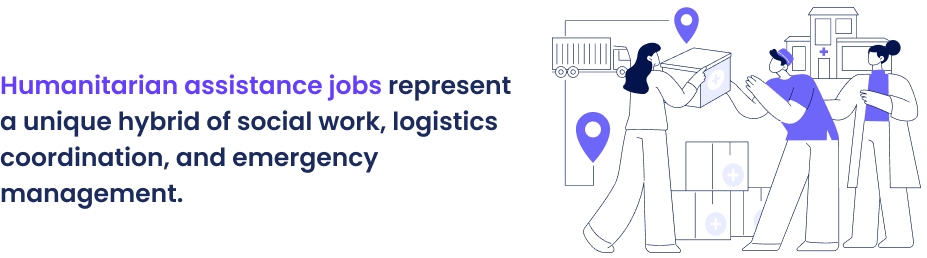
What separates humanitarian aid jobs from adjacent fields such as diplomacy and international development is that aid workers are where the rubber meets the road, i.e directly interacting with vulnerable communities. Furthermore, the aid worker who shows up to provide emergency food, shelter, or other relief supplies becomes the face of the agency or organization that financed, coordinated, and sent them. Thus, humanitarian assistance workers play a key role in both representing the organization that employs them as well as ensuring that all rendered assistance is done so in a fair, equitable, and transparent manner.
In this article, we will provide a clear and practical overview of what a career in humanitarian assistance looks like, including going beyond common assumptions about what it’s like to work in this field. We’ll discuss the types of roles available, how to get them, and what employers are looking for when recruiting.
If you have ever considered working in the humanitarian sector, then this article is for you.

What Humanitarian Assistance Really Involves
A lot of times, when we picture relief assistance, we think of a smiling aid worker in a vest handing out aid packages, perhaps to refugees huddling in tents, but this is only a small part of what is really involved with this type of development aid.
For starters, there is a whole galaxy of sometimes overlapping government agencies, private sector experts, NGOs, and multilateral institutions that come together to collaboratively provide humanitarian assistance in a crisis or afflicted region. In many cases, both international and local NGOs play a central role in implementing and coordinating relief work on the ground, specializing in areas like health, food security, shelter, and refugee assistance.
Taking one step back from fieldwork, it is government donors and various agencies of the United Nations that often provide the coordination, funding, technical standards, and large-scale operational capacity for relief efforts, particularly when an emergency response is needed.
Together, these stakeholders work together in an integrated system designed to deliver quick and effective responses to emergency crises while simultaneously supporting long-term recovery and resilience building.
As a humanitarian assistance worker, you might be working directly in the field with communities in need, but it is equally likely that you could be in a regional office coordinating supplies, managing security, and handling logistics, or you could be back at headquarters handling issues such as funding, creating technical standards, and monitoring outcomes. All of these various roles are an essential part of how development aid gets delivered. Relief assistance is a team effort, and the person handing out food parcels after an earthquake is just one link in the chain.
Furthermore, a career in the humanitarian assistance sector may involve moving between these roles, sometimes operating out in the field and other times back at the regional or global office. Nearly all the senior roles at UN agencies and large International NGOs require experience in frontline engagement as well as possessing managerial skills.

Key Skills, Qualifications, and Backgrounds for Aid Workers
Okay, so you feel like a job as an aid worker might be right for you. What kind of background do you need? Well, first and foremost is a university degree, particularly in fields such as:
International relations.
Public health.
Logistics.
Engineering.
Social science.
Data analytics.
On top of that, most agencies and INGOs require their employees and volunteers to be able to demonstrate a balanced mix of technical and soft skills, including:
Project management capabilities.
Cross-cultural flexibility.
Security awareness.
The ability to remain calm under challenging or difficult circumstances.
Adaptability across different roles and work environments.
However, to really stand out, prospective employees should:
Speak multiple languages.
Have prior volunteer experience; and
Previous exposure to emergency response or disaster relief environments.

Entry Points into Humanitarian and Relief Work Careers
Although there are many pathways that lead to a career in humanitarian and relief work, the most typical involves getting a relevant educational degree followed by building foundational skills via internships, volunteer work, or traineeships, often based in headquarters or regional offices. From there, relief workers typically move on to junior field positions closer to operations, supporting emergency responses and refugee assistance activities under the supervision of senior staff. Only after acquiring hands-on experience in both the foundational managerial skills and field work do relief workers move on to more senior roles.
However, other pathways to a career in humanitarian assistance can include things like local staff roles, being on surge rosters, and being hired on an ad-hoc or short-term basis as an individual consultant. Other times, people move from the private sector into humanitarian work if they possess valuable skills that are in demand by relief agencies and NGOs.
As for the United Nations, the most typical pathway into a professional career at their various agencies starts with an educational degree and then moving onto a volunteer position or junior training program, including the YPP (Young Professionals Programme) and the JPO (Junior Professional Officer Programme).
In terms of practical guidance on where to find development aid hiring opportunities, you can consult job boards, the United Nations career portal, and NGO recruitment platforms. Keep in mind that some UN agencies also operate their own separate recruitment websites.

Career Progression, Challenges, and Long-Term Prospects
Once you’ve made entry into the humanitarian assistance sector, what does a long-term career pathway look like?
Usually, it starts off with a field-based aid worker role where the focus is on direct operational support in emergency response, disaster relief, or refugee assistance. After gaining experience on the ground in implementing and coordinating assistance, the next step typically involves transitioning into a more technical position involving areas like health, protection, logistics, monitoring, and food security. These roles build expertise critical for making relief work more effective.
From there, as aid workers gain more seniority and experience, roles tend to transition into more management and leadership responsibilities, such as overseeing large-scale programs, country operations, or multi-donor portfolios. And then at the very highest levels, senior positions emphasize strategic planning, donor engagement, governance issues, and shaping policy, thus determining how humanitarian assistance is implemented across entire regions and/or in response to specific crises.
In terms of the United Nations specifically, P-series (Professional) careers follow a structured and merit-based framework that rewards performance and experience. There are no automatic promotions. Instead, employees must compete for open roles, and it typically takes four or five years of experience to move up one level.
Although being a relief worker is a higher calling, it must be emphasized that a career in this sector comes with a lot of challenges.
Security risks
First, security risks are an ever-present concern as many front-line roles are located in areas where there are persistent threats from political instability, crime, and disease.
Occupational burnout risk
In addition to security risks, the intensity and emotional weight of working in refugee assistance or emergency response can contribute to chronic stress and burnout, particularly during prolonged exposure. Furthermore, maintaining a healthy work-life balance can be difficult for aid workers as responding to emergencies often involves extended deployments, irregular schedules, and separation from family and home life. This makes it even more important for anyone considering a career in this field to make sure they can remain resilient and self-aware under difficult circumstances.
Wrap-up
Although being a relief worker can be challenging, the truth is that the long-term outlook for careers in humanitarian assistance remains broadly positive. UN agencies, government donors, and INGOs are evolving into more professional and equitable employers by providing greater emphasis on competitive pay rates, formal qualifications, standardized competencies, and implementing evidence-based program management.
There is also a rising demand for specialized expertise in areas such as data analysis, climate resilience, emergency response coordination, logistics, public health, and refugee assistance, reflecting the increasing technical sophistication of modern aid operations. Development aid jobs also now offer substantial opportunities for global mobility and flexibility, including remote positions involved in monitoring, coordinating, and evaluating project implementation. All in all, experienced aid workers have a valuable portfolio of transferable skills, giving them excellent long-term career prospects.


